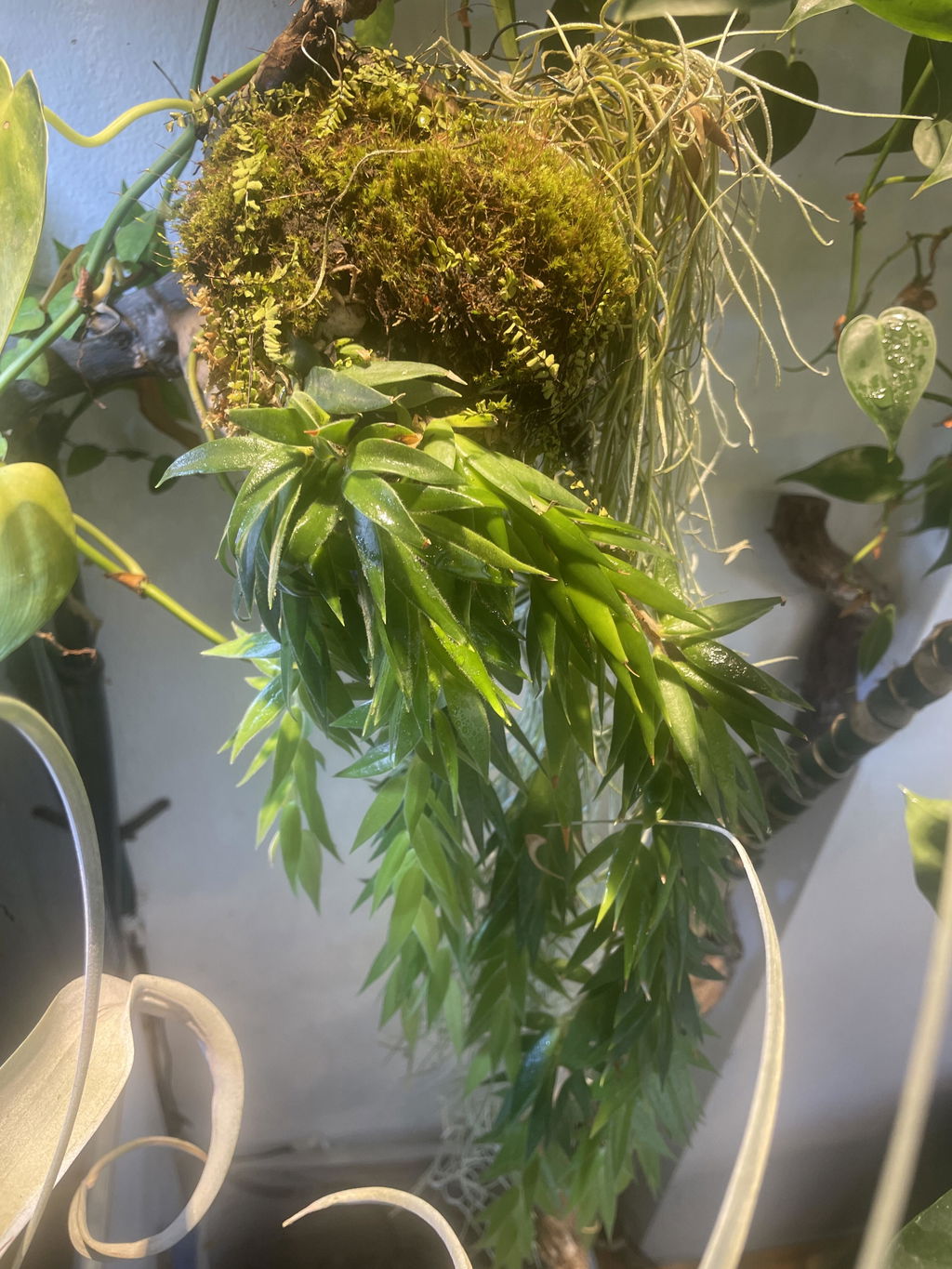
Name: Ceratostema rauhii Luteyn
Etymology: The genus name Ceratostema derives from Greek and refers to the horn-like structures of the corolla. The specific epithet rauhii honors the German botanist Werner Rauh, who collected the type material.
First description: In 1992 by James L. Luteyn in the Bulletin of the Torrey Botanical Club 119(3): 314.
Origin/Distribution: Known from northwestern Peru; the type material comes from the Lambayeque region.
Site/Habitat: An epiphytic shrub from montane Andean areas at around 2,200 m. We recommend bright, filtered light, high humidity, and good air circulation. It grows best in cool to intermediate conditions, at approximately 14–24 °C, with a marked drop in temperature at night.
Description and notes: The species produces slender shoots that hang when young and can reach considerable lengths on older plants. The narrowly ovate to linear-ovate, finely hairy leaves are densely arranged along the shoots; the young branches also bear conspicuous pale hairs. A loose, airy substrate that retains a little moisture is ideal. We keep the root zone evenly slightly moist, but avoid waterlogging and allow the surface of the substrate to dry out a little between waterings. A hanging basket or elevated position particularly showcases its trailing growth.