Name: Philodendron furcatum Croat & D.C.Bay
Etymology: The genus name Philodendron is derived from the Greek phílos ("loving") and déndron ("tree"), referring to its frequent climbing growth on trees. The specific epithet furcatum means "forked" and refers to the noticeably branched primary lateral veins of the leaves.
First description: Published in 2008 by Thomas B. Croat and Dorothy C. Bay in Novon, Volume 18.
Origin/Distribution: The species is known from western Colombia, particularly from the Pacific Andean slopes in the Valle del Cauca Department.
Habitat/Growing conditions: Philodendron furcatum is a climbing plant of moist tropical forests and has been found, among other places, in deep shade along stream banks. In cultivation, we recommend warm-temperate conditions of about 18–28 °C, high humidity, gentle air circulation, and bright, indirect light. A coarse, airy aroid substrate consisting of bark, coconut chips, perlite, or pumice with a small moisture-retaining component keeps the sensitive roots evenly moist without causing waterlogging.
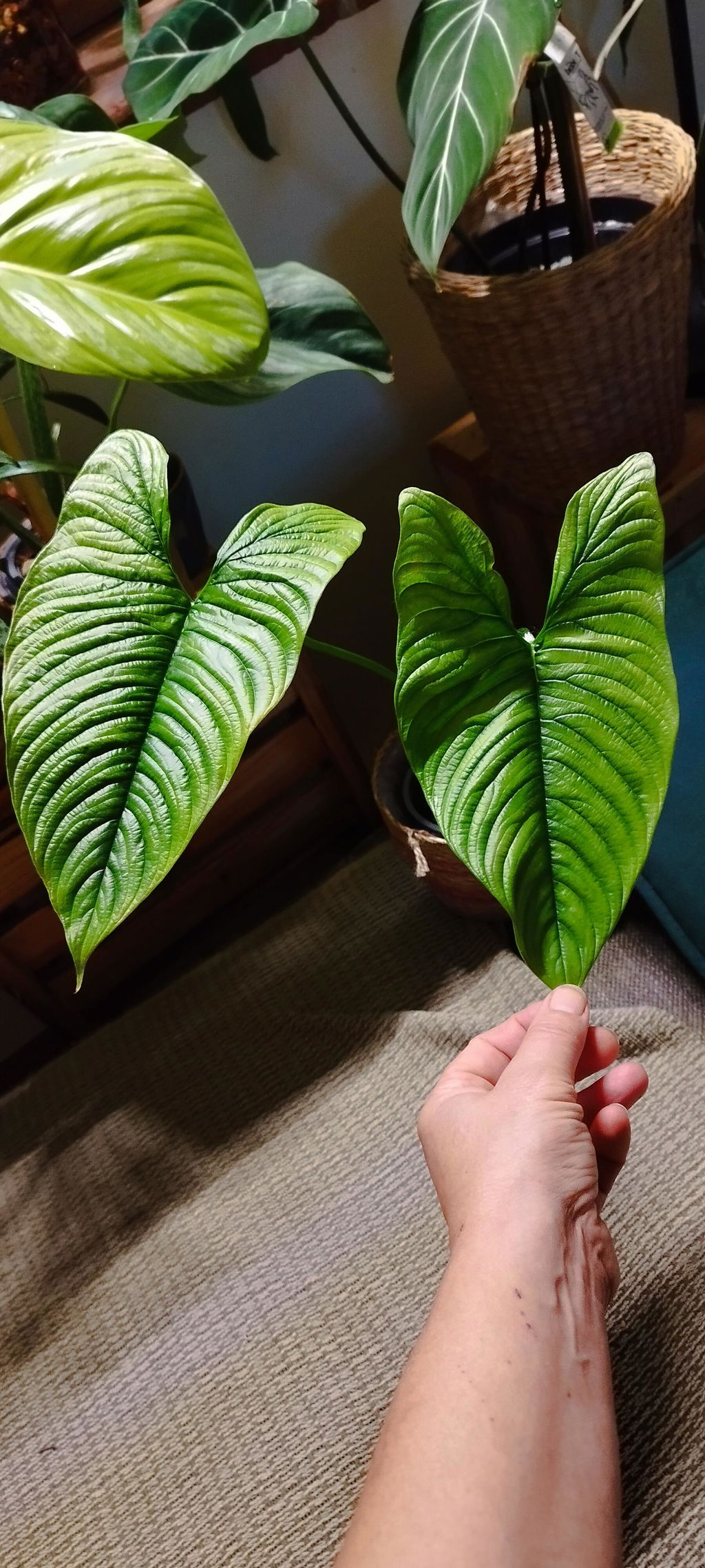
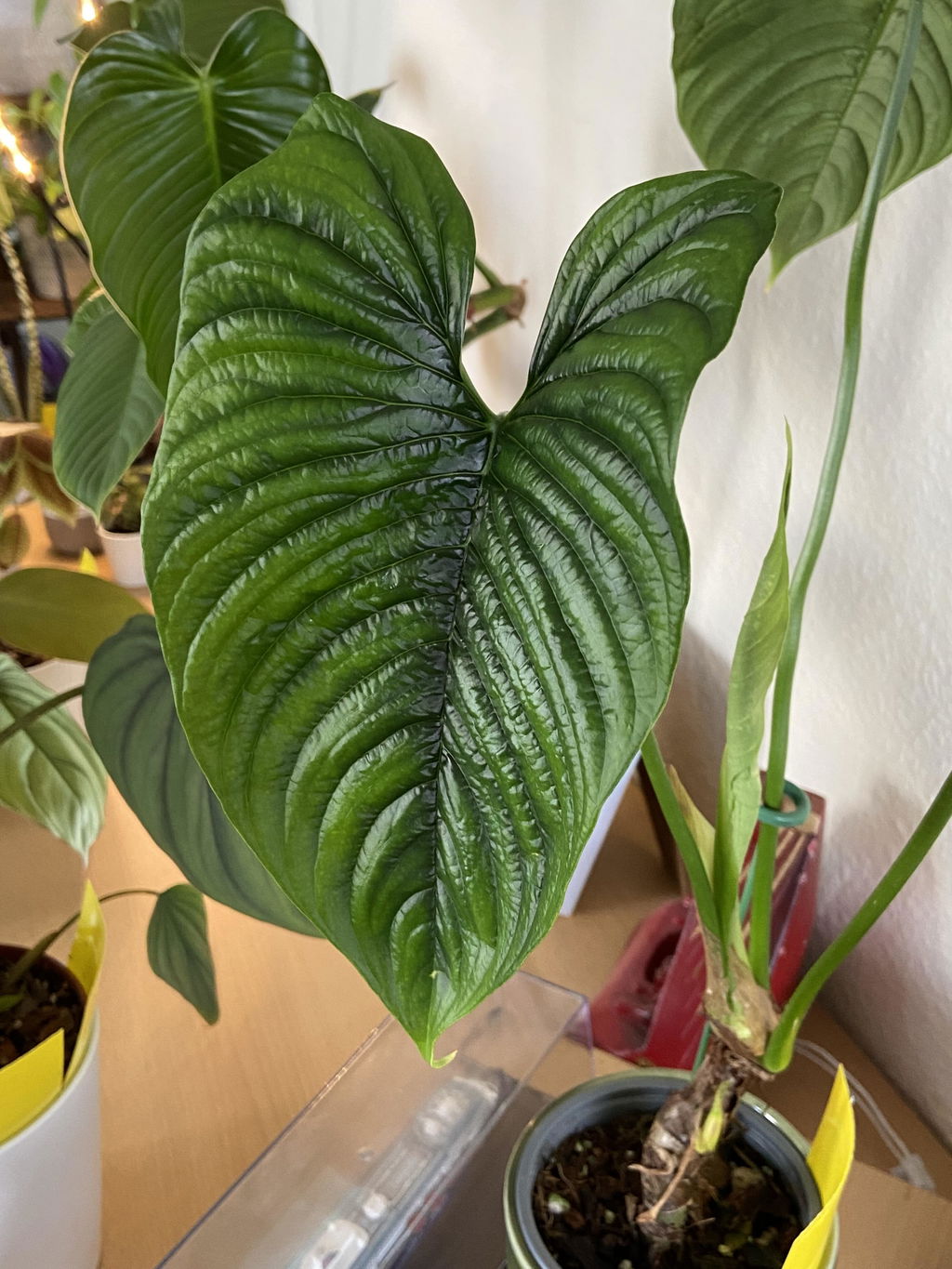
Description and notes: Characteristic features are the large, deeply heart-shaped, slightly bullate leaves with a dark green upper side and a lighter underside. Particularly striking are the sunken, clearly forked lateral veins and the horseshoe-shaped leaf sinus. The species climbs with elongated stem segments and develops best on a moist moss pole. We recommend soft water, consistent moisture, and protection from dry heating air as well as direct sun.