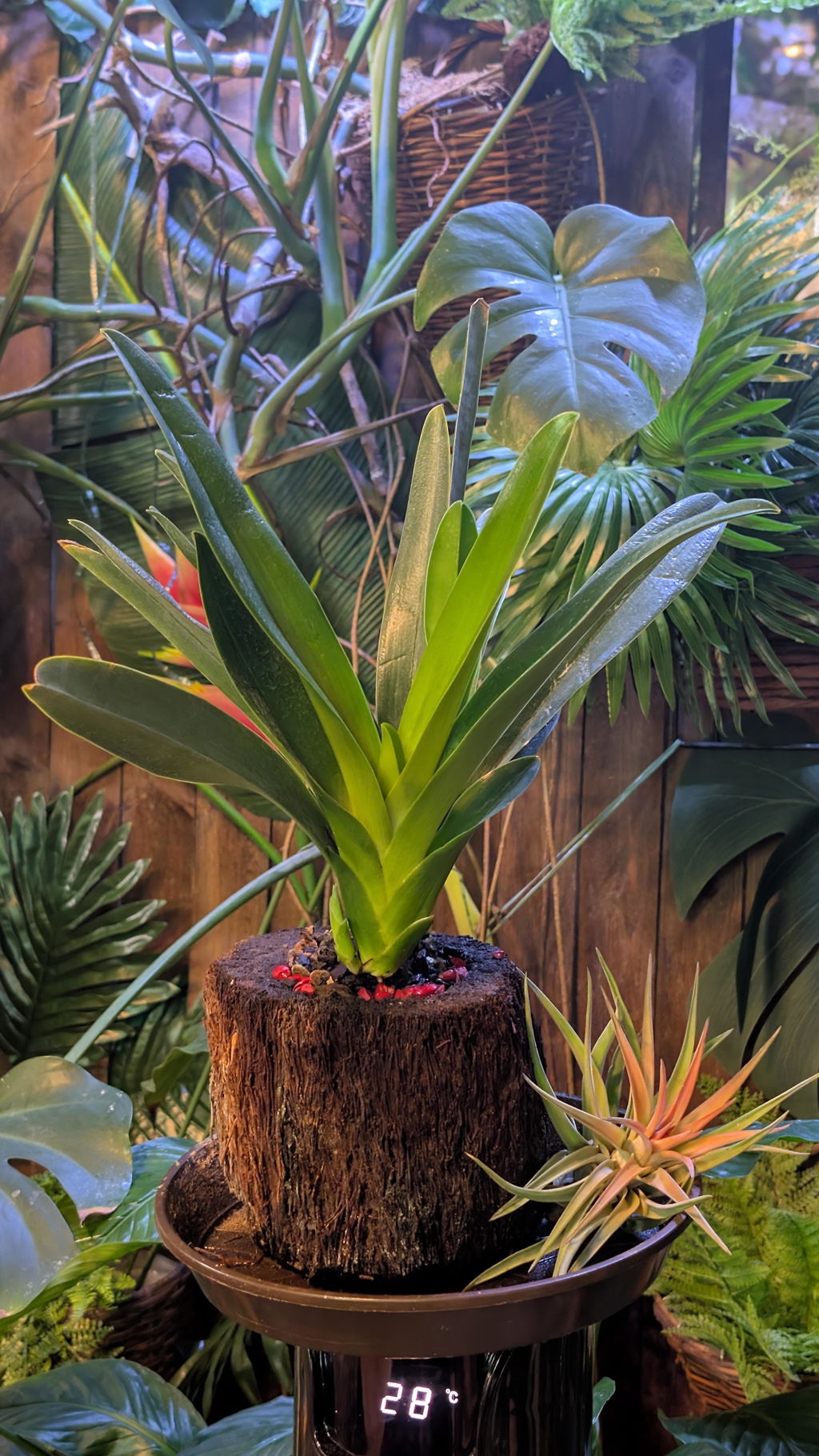
Name: Phragmipedium humboldtii 'Fortuna', (Warsz. ex Rchb.f.) J.T.Atwood & Dressler 1998 publ. 1999
Synonyms:
Cypripedium caudatum var. roseum, Delchev. 1867
Cypripedium caudatum var. warscewiczii, (Rchb.f.) Kerch. 1894
Cypripedium humboldtii, Warsz. 1852
Phragmipedium caudatum var. roseum, (Delchev.) Pfitzer 1903
Phragmipedium exstaminodium subsp. warszewiczii, Dressler 2005
Phragmipedium monstruosum, Archila 1999
Phragmipedium popowii, Braem, Ohlund & Quene 2004
Phragmipedium triandrum, Archila 1999
Phragmipedium warscewiczii, (Rchb.f.) Christenson 2006
Selenipedium warscewiczii, Rchb.f. 1873
Etymology:
humboldtii = Alexander von Humboldt, (*1769 - †1859), conducted scientific field studies in the fields of physics, geology, mineralogy, botany, vegetation geography, zoology, climatology, oceanography, and astronomy.
Trade name: South American lady's slipper
Origin: Mexico, Guatemala, Honduras, Nicaragua, Costa Rica, and Panama
Habitat:
Humus epiphyte, with no precise details
Notes:
Phragmipedium humboldtii is/was often confused with Phragm. warscewiczianum.
The petals can exceed 50 cm in length. As the petals develop, please do not touch their tips, as this will cause them to stop growing.
This species often grows on slopes. Its petals grow very long and hang down until they touch the ground, allowing insects to climb up them and pollinate the flower.