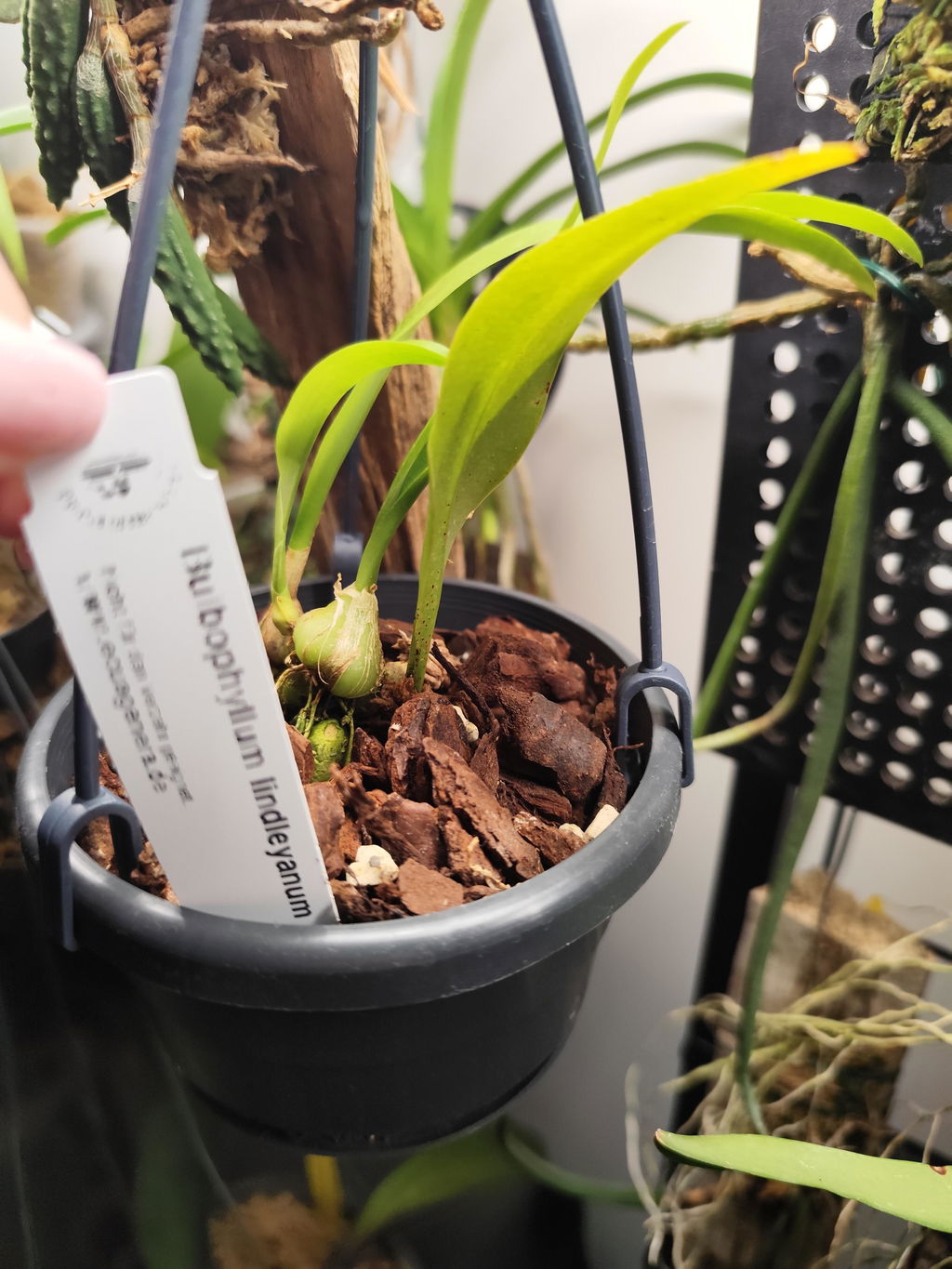
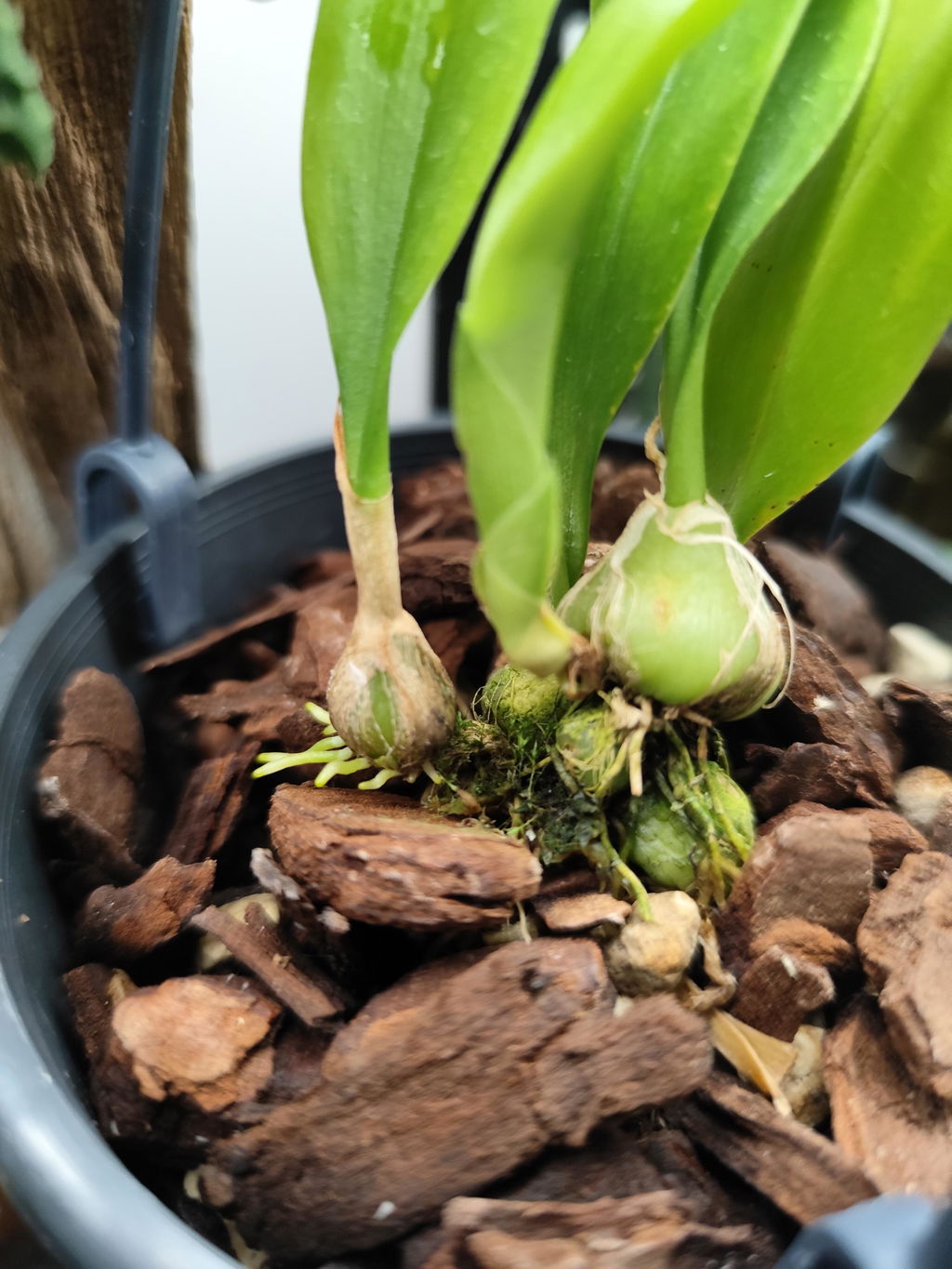
Name: Bulbophyllum lindleyanum Griff.
Synonyms: Bulbophyllum caesariatum Ridl.; Bulbophyllum rigens Rchb.f.; Phyllorchis lindleyana (Griff.) Kuntze.
Etymology: Named in honor of the British botanist John Lindley (1799–1865).
First description: Described in 1851 by William Griffith.
Origin / Distribution: India, Myanmar, and Thailand.
Location / Habitat:
Epiphytic in moist tropical forests at low to moderate altitudes. The species grows under warm to intermediate conditions with high humidity, good air movement, and without a pronounced dry season.
Description & Notes:
Small, compactly growing species with a creeping rhizome and densely packed, flattened ovoid pseudobulbs. Each bulb bears a single, lanceolate leaf. The relatively long inflorescences, which usually bloom in winter, arise basally and bear numerous small, finely pubescent flowers along a curved rachis.
For successful cultivation, consistently high humidity, regular watering without waterlogging, and very good air circulation are crucial. The species is particularly suitable for mounting on bark or for very well-draining substrates. Longer dry periods should be avoided.